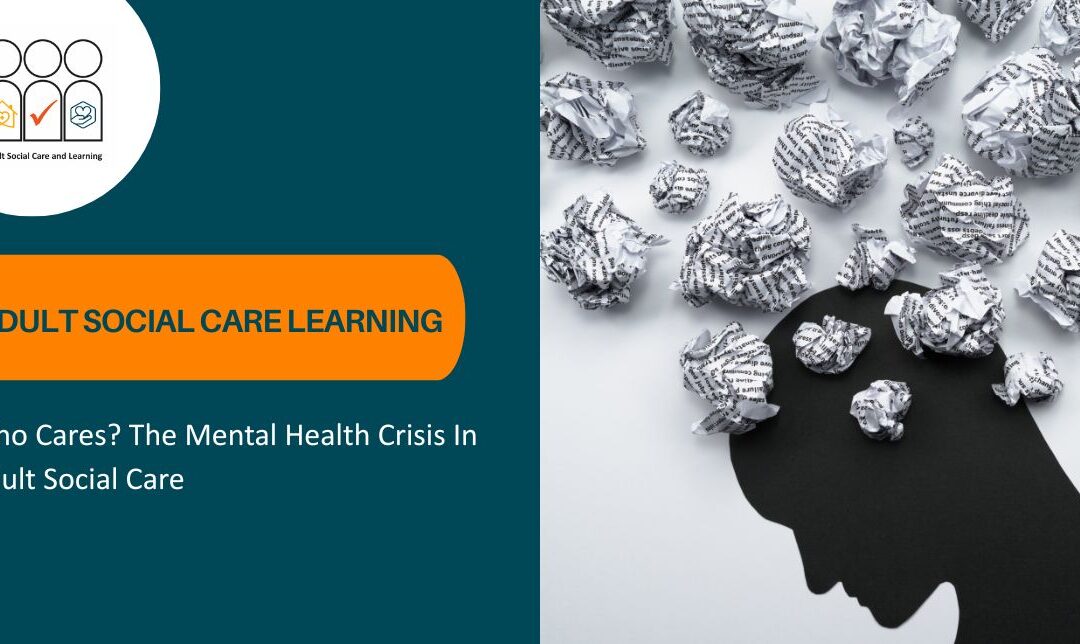
Who Cares?
The mental health crisis in the adult social care workforce shows a sector at breaking point.
Between rising demand, on the job stress, and a severe lack of training, social care workers are facing an impossible situation. This negative cycle will end up crippling the entire system if not addressed.
State of the Nation
The data around mental health paints a stark picture. The CQC reported that in June 2024 there was an increase of 600,000 people contacting secondary mental health services compared with June 2019. That is a 45% increase in just five years.
Whilst experts point to causes such as the economy, social pressures, and ongoing post-pandemic issues, the effect is universal. The simple fact is that demand for mental health services is rapidly outstripping the system’s ability to supply.
The strain on the NHS is immense, and waiting lists for mental health support are growing, leaving many people without timely access to the care they desperately need. Case in point: very urgent referrals to adult crisis teams were 45% higher in June 2024 than in June 2023. However, in June 2024, only 20% of adults with a very urgent referral were seen face-to-face within the 4-hour standard.
As a result, the burden is continuously being pushed onto other services and sectors, with adult social care left struggling to pick up the slack.
The Spreading Cracks in Social Care
Social care workers are being forced to bear the brunt of the ongoing systemic crisis. They are increasingly having to manage vulnerable people with a range of complex physical, emotional and psychological needs. The challenges being presented are now often beyond what standard training can prepare them for.
This is having a significant impact at all levels. The CQC found that services are facing problems around workforce retention, staffing shortages, and a lack of appropriate training. As a result, those receiving care “reported worse experiences” around areas including being treated with compassion, feeling listened to, and getting the help they need from services.
Simply put, rising demand is straining an overworked system where resources are already limited. Social care workers are being forced to go beyond providing essential support for daily living, to trying to handle the additional, intensive, therapeutic, needs of mental health crises.
The constant pressure to do more with less is rapidly pushing the sector past the point of no return.
A Job That Costs
Let’s be clear- working in adult social care is not easy. It is a role which already asks a lot as workers support people through some of their hardest moments, including illness, decline, and end-of-life care.
And the current state of the system is now only adding to the list of stressors.
Social care workers are being asked to deal with:
- Emotional Labour: Constantly needing to be empathetic, compassionate, and emotionally available for clients, leading to compassion fatigue and burnout.
- High Workload and Understaffing: Many care providers work long hours in understaffed settings with insufficient breaks, leading to physical exhaustion and feeling overwhelmed.
- Continually Changing Demands: Care workers often lack control over their schedules and tasks, leading to frustration and a sense of being powerless.
- Safety Risks: Care workers can face verbal and physical aggression from clients, adding a layer of fear and anxiety to their daily work.
- Poor Pay and Lack of Recognition: Despite providing essential support, social care staff often receive low wages and a lack of positive public recognition, leading to feeling undervalued and unappreciated.
Is it any wonder that, in 2020, a Unison Trade Union survey found that 76% of social care workers reported feeling stressed at work? Further data from a GMB Union survey showed 70% of social care workers report understaffing negatively affecting their mental health, as 58% work unpaid hours on a weekly basis.
These issues are having a catastrophic impact on rates of burnout and poor mental health amongst staff. As a result, many choose to leave the sector, which in turn worsens the staffing crisis, raising the pressure on those who remain. And so, the negative cycle continues.
Too Many Challenges, Too Little Training
The challenges being faced by the social care sector are not being helped by the widespread lack of effective training, particularly around mental health.
Onboarding training and basic courses around roles and responsibilities are not enough for the complicated cases which workers are now having to regularly deal with. Recognising, understanding, and appropriately responding to the complex mental health needs of clients are skills which need to be directly addressed.
Training and skills gaps include:
- Understanding Mental Health Conditions: Without a foundational knowledge of common mental health conditions it is difficult to tell the difference between a client’s typical behaviour and a sign of a worsening mental health crisis.
- De-escalation: Being able to de-escalate a tense situation is crucial for both the safety of the client and the worker. Without proper training staff may resort to methods that worsen the situation.
- Resilience and Self-Care: Workers desperately need tools for managing their own mental health, including recognising the signs of burnout, establishing healthy boundaries, and practicing self-care.
The chronic lack of training means that staff are unable to effectively support their clients or protect their own mental well-being, further fuelling the negative feedback loop of burnout and staff loss.
How to Break the Cycle
The best place to start with breaking the vicious cycle within social care is by providing targeted training. This has to directly address the practical skills for meeting client needs, as well as supporting the well-being of workers.
It needs to cover:
- Specialised Mental Health Training: Staff develop confidence in recognising early warning signs, providing immediate support, and connecting with wider services who can assist.
- Specific Skills Training: This should include de-escalation techniques, crisis management, and effective communication strategies for clients and coworkers.
- Mandatory Self-Care and Resilience Training: Ensure staff can understand and manage their own mental well-being around stress management, burnout prevention, and the importance of professional supervision and support.
That is why we are so passionate about working with the LDSS to provide fully funded mental health training.
NCFE CACHE Level 2 Certificates are available through three pathways for developing staff skills on mental health care. The focus is on directly addressing fundamental skills gaps to help staff build their understanding and confidence around the mental health situations they may face.
This type of training not only improves the quality of care provided but also reassures staff that their well-being is valued.
As such, social care workers can rediscover their sense of job satisfaction and long-term career aspirations, which in turn improves retention whilst helping attract new talent to the sector.
Conclusion
There is a mental health crisis in the adult social care sector which needs to be proactively addressed. ASAP. Accessing focussed training is a key step to breaking the current negative cycle- before the system faces complete collapse. It is only by directly filling the skills gaps around mental health that the social care sector can start to regain a solid footing for both staff and service users.
Learn more about available, fully funded, mental health training for adult social care.