NCFE Accredited Training
Our Skills for Care approved adult social care training courses all lead to recognised and accredited Level 2 NCFE CACHE certificates. Whether you are preparing to work in adult social care or are already an adult social care practitioner looking to upskill, these courses provide vital mental health training. What’s more, all courses are eligible for funding through the Learning and Development Support Scheme.
| Course Name | Course Code | Estimated Hours | Level |
| Mental Health Needs | 601/3434/3 | 45 Hours | NCFE Level 2 |
| Mental Health Awareness | 600/6134/0 | 64 Hours | NCFE Level 2 |
| Mental Health Problems | 601/3438/0 | 80 Hours | NCFE Level 2 |
Pay £315+VAT when you book and then claim it back through the LDSS.
Course code: 601/3434/3
Units: 5
Total estimated learning hours: 45
Read more about this course
Develop your understanding of working with people with mental health needs, focusing on care, law and legislation and support in the workplace.
The objectives of this course are to understand:
- the role of the mental health worker
- the process and approaches involved in the care and support of those who experience mental ill-health
This course covers:
- Understand The Role Of The Mental Health Worker
- Mental Health And Mental Health Issues
- Understand Duty Of Care In Adult Health And Social Care
- Approaches To Care And Management In Mental Health
- Understanding Change And Support In Relation To Mental Health

Pay £315+VAT when you book and then claim it back through the LDSS.
Course code: 600/6134/0
Units: 10
Total estimated learning hours: 64
Read more about this course
Helps staff to gain a better understanding of mental health, what contributes to poor mental health, and introduces some common difficulties which people may be dealing with.
The objectives of this course are to:
- raise awareness of mental health and a range of mental health conditions
- increase the learners understanding of mental health and the causes of mental ill-health
This course covers:
- Understanding mental health overview
- Understanding common mental health issues; stress, anxiety, depression, postnatal depression, phobias, bipolar disorder, schizophrenia, dementia and eating disorders

Pay £315+VAT when you book and then claim it back through the LDSS.
Course code: 601/3438/0
Units: 13
Total estimated learning hours: 80
Read more about this course
Examines specific mental health problems which staff may encounter, providing a greater level of understanding which enables them to look beyond exhibited behaviour to the underlying motivations and meaning.
The objectives of this course are to:
- raise awareness of mental health and a range of mental health conditions
- increase the learners understanding of mental health problems, which could be used to support their role in the workplace or where they may work or interact with individuals with mental health problems
This course covers:
- Understanding mental health overview
- Understanding the causes, effects and management of; stress, anxiety, depression, postnatal depression, phobias, bipolar disorder, schizophrenia, dementia, eating disorders, ADHD, OCD and PTSD.
What are the three mental health training pathways for social care?
The Mental Health Training Pathways are three accredited, NCFE Level 2 qualification routes designed for non-regulated adult social care staff in England. These pathways provide vital skills in mental health awareness and crisis management, and are 100% reimbursable through the Government’s Learning and Development Support Scheme (LDSS).
For those looking to go deeper into developing staff mental health skills and knowledge, we offer three training pathways to choose from in order to help define and evidence the CPD which has been undertaken. This approach also helps with longer term staff development goals by providing a road map for building core skills which can then be further enhanced with mental health specialisation.
1. Standard
The core course
2. Specialised
Choose from 2 course options
3. Mental Health Ambassador
The full package
Concentrate on the particular requirements and responsibilities involved in roles where staff may be providing care to those with mental health needs.
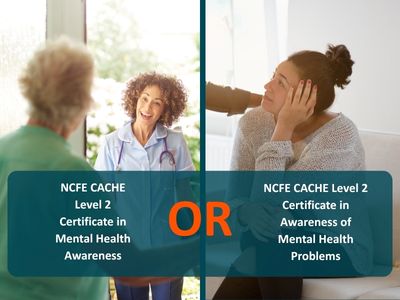
Mental Health Awareness helps staff to gain a better understanding of mental health, what contributes to poor mental health, and introduces some common difficulties which people may be dealing with.
Awareness of Mental Health Problems examines specific mental health problems which staff may encounter, providing a greater level of understanding which enables them to look beyond exhibited behaviour to the underlying motivations and meaning.
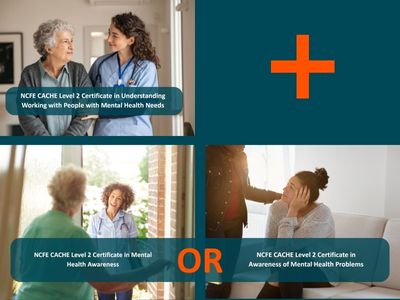
Complete the core course as well as your choice of one specialised option. Staff on this pathway develop a full understanding of mental health care, earning two accredited qualifications to become a Mental Health Ambassador.
What is the return on investment for mental health training in care settings?
470%
For every £1 invested in mental health and wellbeing interventions, employers receive an average return of £4.70 (Deloitte 2024 analysis).
630%
Universal Interventions (like organisation-wide training) deliver the highest returns, averaging £6.30 for every £1 spent.
£51 billion
What poor mental health costs UK employers annually (approx) through absenteeism, presenteeism, and staff turnover.
The Need For Mental Health Training
One in four adults experience mental health problems, with it estimated that there are over half a million jobs in adult social care which support those with mental ill health.
NHS mental health services in England received a record 5.2 million referrals during 2024, representing a 37.9% increase from 2019.
In 2023, mental health services in England received a record 5 million referrals, a 33% increase since 2019.
Referrals to adult community mental health services rose by 11% in the last year.
Organisations that implement mental health training for managers report a 30% reduction in mental health-related absences.
The Impact of Training on Your Provision
Improved Staff Health and Wellbeing:
- Develop support structures within teams
- Reduce staff absences due to mental ill health
- Improve staff retention
Enhanced Quality of Care and Support:
- Self-management
- Improved communication and relationships
- Better management of challenging behaviours
Reduced Stigma and Discrimination:
- Improve outcomes
- Create a culture within your setting
- Embed discussions around mental health into everyday
Improved Identification and Intervention:
- Holistic and person-centred care
- Faster access to support
- Reduced escalation of crises among service users
By providing mental health training for your staff, you enable a virtuous cycle which shifts your approach from reactive crisis management to proactive support and prevention, benefiting the entire care ecosystem at your setting.
How do I claim LDSS funding for mental health training?
Non-regulated care staff across England can access the mental health training courses in our three pathways using available government funding.
This includes those working within:
- Residential Care Services
- Domiciliary Care
- Day Care
- Community Support Services
Who is eligible for funded mental health training?
To access the 100% funded pathways, your organisation and staff must meet the following criteria:
-
Eligible Employers: Must provide adult social care services in England and have an up-to-date Adult Social Care Workforce Data Set (ASC-WDS) account.
-
Eligible Staff: Includes non-regulated care staff, deputy managers, CQC-registered managers, and agency staff.
-
Location: Employees must be legally employed in England with a valid UK National Insurance number.
VAT information – Companies within the UK recoup VAT payments automatically as part of their VAT returns. This is done automatically by accounting software used to submit the return. Therefore, you will recoup 100% of your investment back from these training pathways. Organisations that are not VAT registered should contact us for advice.
FAQs
-
Q: Is the Mental Health Ambassador pathway accredited?
-
A: Yes. By completing the core course and a specialised option, staff earn two NCFE Level 2 accredited qualifications to become a certified Mental Health Ambassador.
-
-
Q: Can I reclaim the VAT on these courses?
-
A: Yes. UK companies recoup VAT automatically via their returns. This, combined with the LDSS reimbursement, ensures the training is effectively free for your care provision.
-
-
Q: Does this training help with CQC inspections?
-
A: Absolutely. These pathways provide documented evidence of staff CPD (Continuing Professional Development) and demonstrate a commitment to high-quality, person-centred care, which is a key focus for CQC assessments.
-
Additional specialist training pathways
For larger group bookings of 20 or more learners we are able to offer in person training covering specialist pathways within care for further expertise in mental health support. Please contact our team to arrange your funded group booking on advice@skillsforprogress.com